How 5 Gyres is Fighting Microplastics: A California Love Story of Activism and Science
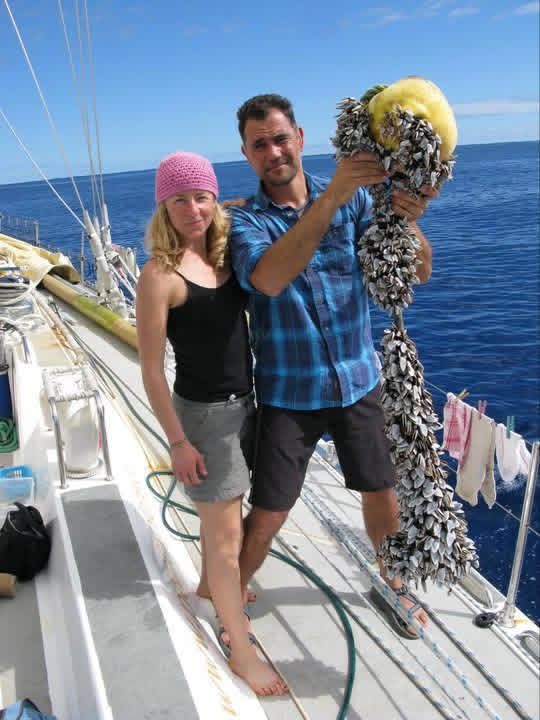
Meet Anna Cummins and Marcus Eriksen: the Environmental Power Couple Behind 5 Gyres
Story by Irina Abraham
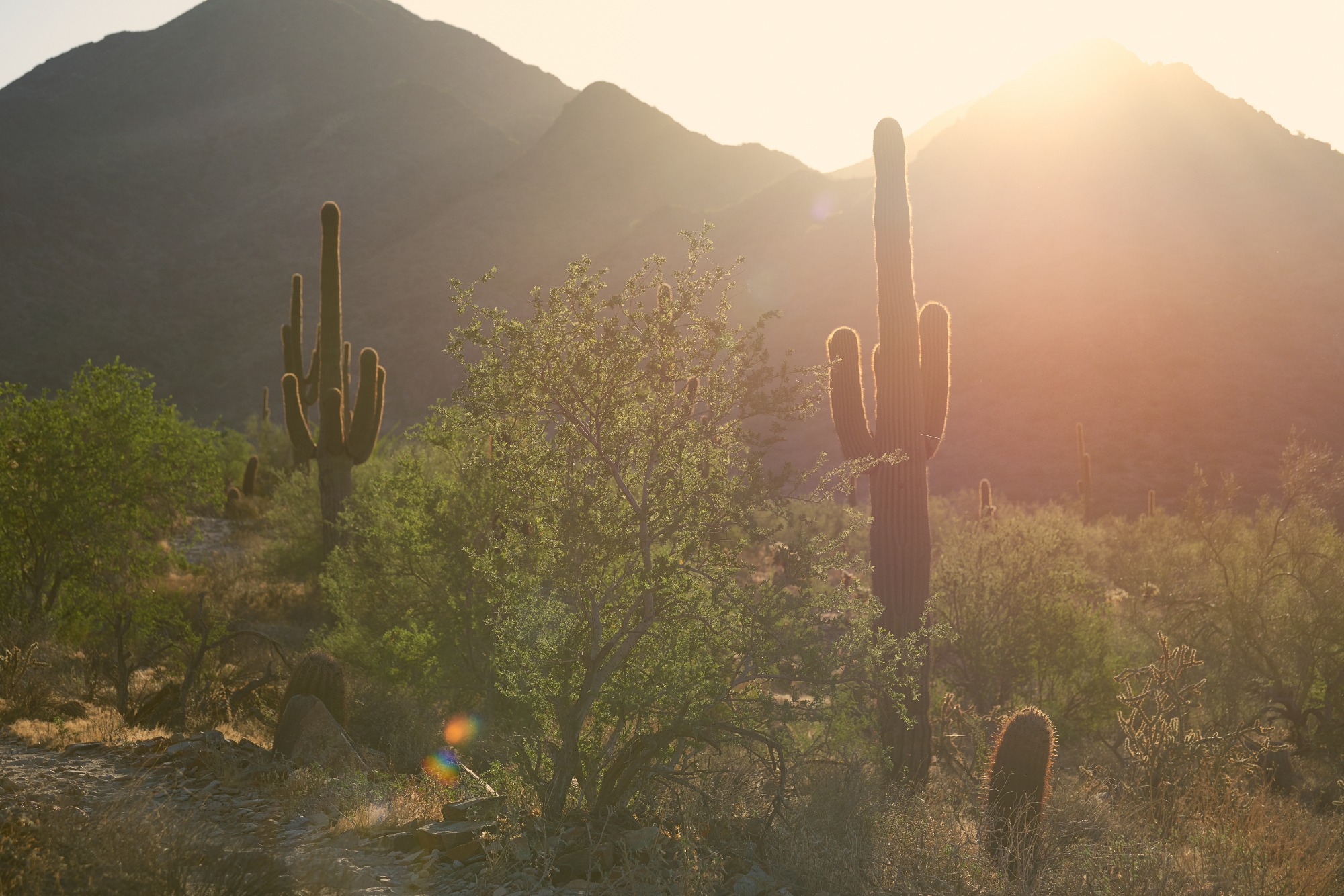
Somewhere among the California hills, there lies a piece of paradise adorned with legends of Steve McQueen’s buried motorcycles, carefully crafted dinosaur sculptures, and breathtaking sunsets.
The most fascinating thing about this place is its residents: there is a poet, a gold-bearing athlete, a muralist, and a promising young filmmaker. A power couple runs the place – Anna Cummins and Marcus Eriksen. They have sailed the roaring seas, unearthed precious dinosaur bone, and were a part of a team that discovered plastic micro beads were taking over The Great Lakes.
Lucky to be one of the residents of this vibrant community, I would see Marcus and Anna buzz around, constantly busy but always available for a quick chat and a hug. Anna would often be seen working in the garden, then hopping on a work Zoom, practicing playing the fiddle and then dressing for a fundraiser. Marcus would bounce between trips overseas (I have heard exciting words like conferences and summits), building dinosaur exhibits in the workshop, and coordinating a myriad of tasks on the land. Every time my family and I would come back traveling, they’d greet us with a smile and a “welcome back to the farm!”
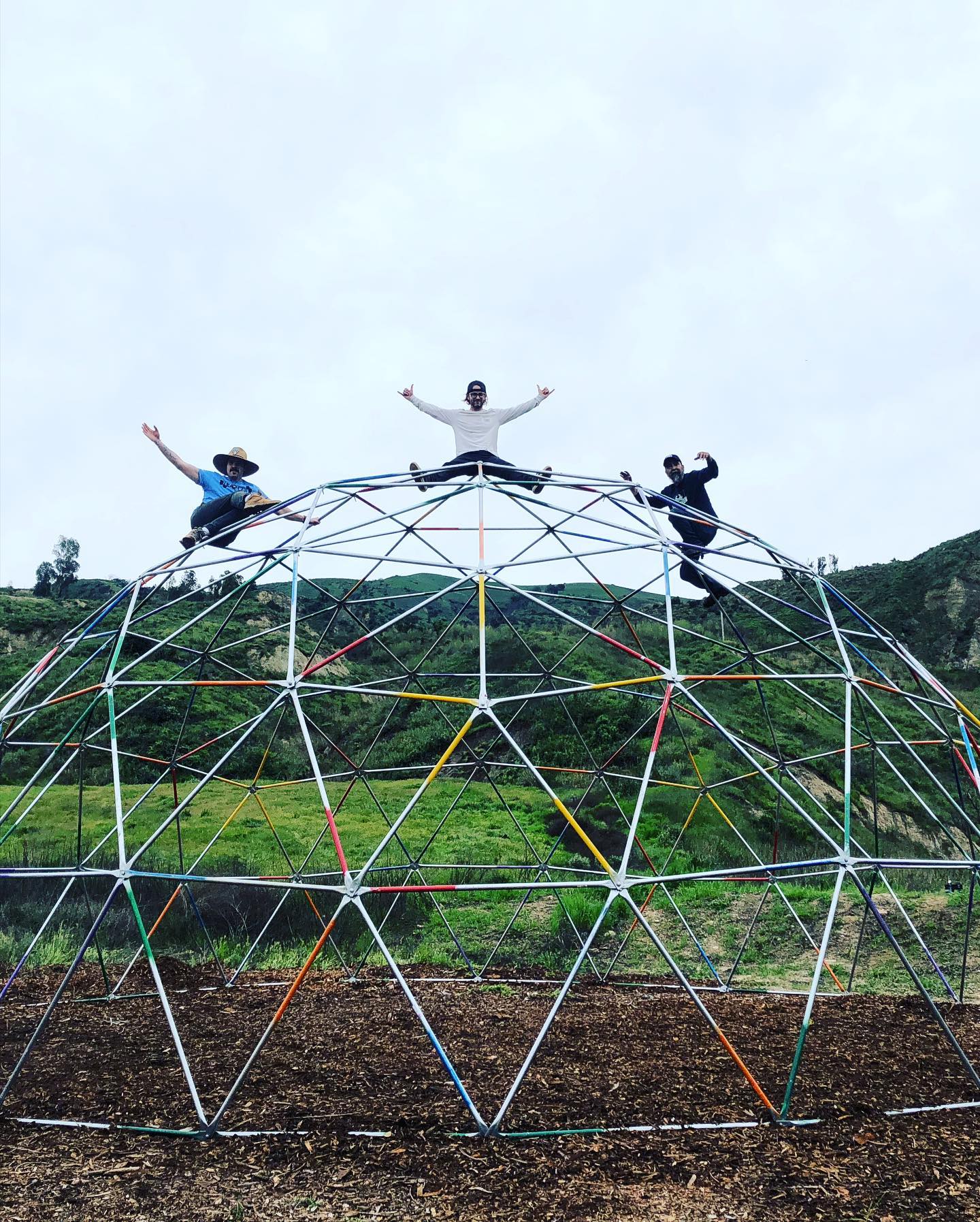
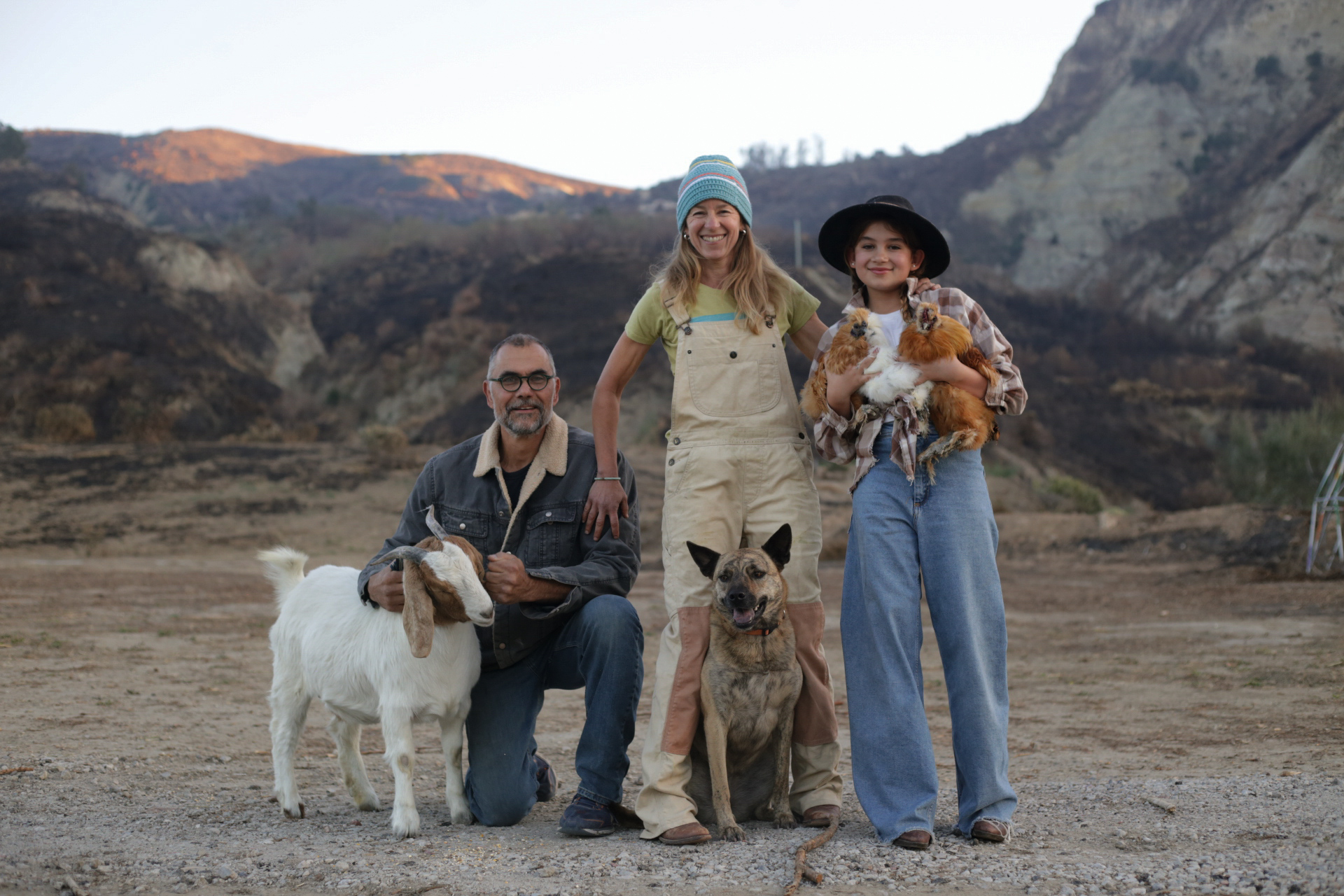
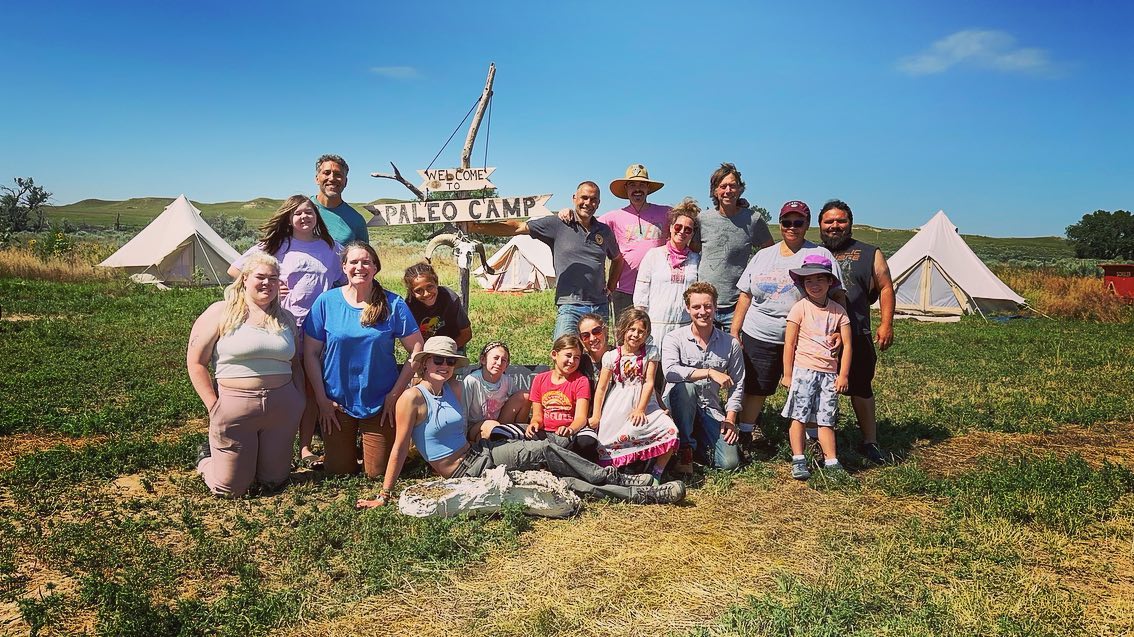
Everyone calls the place “the farm,” even though this is the most unusual one of its kind. There is a community garden for locals, geodesic domes covered in passionfruit, a farmer who grows delicious microgreens, a beekeeper, and a few goats and chickens that are treated like pets. If anything, the farm is a place for humans to make good use of the land and the animals to have a life akin to one at a resort (my husband and I would know – we take care of the goats, and all they do is eat and go for walks.) Anna says that land ownership is a daunting concept for them, and they generously share the gift of land with others – be it people who need an affordable place for their 50 chickens, artists who long for a respite, or animals who have nowhere else to go.
How Anna and Marcus Fell in Love Through Ocean Conservation
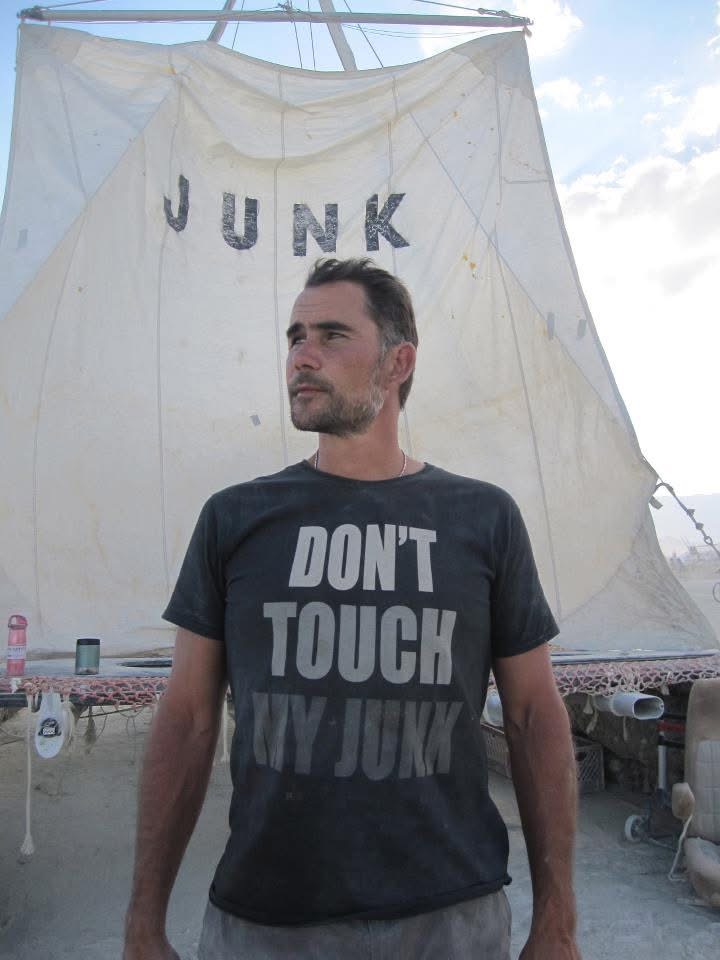
Watching the couple zip around, I have gotten all the more curious about their way of life. My interest piqued even more when I found out that Marcus was behind the famous JUNK raft – a homemade craft made from 15,000 plastic bottles that floated two passengers – Marcus and Joel Paschal – from California to Hawaii.
I dug deeper and learned that Anna and Marcus ran a non-profit – the first one of its kind – whose mission was to spread awareness of microplastics in our water and air. So, after a year of living side by side, sharing some meals and laughs, we finally sat down to talk.
Anna and Marcus met through Captain Charles Moore, a pioneer in research on microplastics. They then had the chance to work together on an exhibit to promote reuse. Marcus admits Anna’s passion for the work impressed him, and her fluffy white vest and hair styled into knobs were “freakishly cute.” Anna confesses that she couldn’t help but notice Marcus’s intensely blue eyes. The exhibition ended, but they weren’t ready to part ways. What followed was a shared adventure and a first kiss at Burning Man. A few months later, they joined the Charlie Moore expedition in the North Pacific Ocean, where Marcus proposed. And so their story began.
At the time, microplastics were akin to ghosts and aliens. People heard about them but hadn’t really seen them; the research was marginal, and, frankly, few cared. But not caring was simply not a part of the couple’s DNA. Anna tells a story of how, wandering in the woods when she was a little girl, she found a creek polluted by manure from the local stable. Having lost sleep over it, she wrote a passionate letter to the stable owner, which, as Anna confessed in her TED Talk, did “zilch.” That modest beginning pointed to a rocky road ahead, but there was no stopping her. Marcus, too, had always been fascinated by nature, observing wildlife and eventually going into paleontology. He found himself wondering about the future of our planet when he served as a Marine in the Gulf War, watching “wild land turn to waste land,” as he put it.
The Bold Expedition that Changed Everything: Inviting Artists and Filmmakers Onboard
Inspired by Charles Moore and his pioneering efforts to bring the world’s attention to the silent and quasi-invisible killer – microplastic, Anna and Marcus forged their own path. At the time, the big research questions were: where all the plastic was, how much was out there, and whether it was causing harm.
Back then, no one was talking about microplastics. The term was coined by Richard Thompson, Professor of Marine Biology and the director of the Plymouth Marine Institute, as early as 2004. No one had surveyed the ocean for plastics much. Some work in the North Pacific and West side of the North Atlantic had been done, and there had been a few papers on the issue in the 1970s and 1980s. Charles Moore popularized the North Pacific Gyre that accumulated much of the plastic.
Thus, there was no support to be had from the scientific community. With no backing of Ivy League diplomas or publications in reputable scientific magazines, it was Marcus and Anna against the world. But the couple came up with an out-of-the-box solution. They invited other researchers and the public to join their first expedition across the North Atlantic from Bermuda to the Azores. Artists and filmmakers from around the world filled their boat, fundraising for the journey, thus sponsoring the voyage.
Other expeditions followed: one across the Indian Ocean, one from Rio De Janeiro to Cape Town, to Namibia and Uruguay, Chile to Easter Island, then the Marshal Islands, Japan and back to Hawaii and Vancouver. The business model worked. They uncovered that the plastic was getting accumulated around the five major circular gyre currents of the earth’s oceans, after which their NGO – 5 Gyres – was named. They managed to get NBC and CNN to cover the topic, but it wasn’t enough. A fellow scientist asked Marcus why they didn’t publish any papers, and that turned out to be the missing piece of the puzzle. In 2013, they published their first paper on the South Pacific microplastic accumulation zone. The NGO finally earned credibility and everything changed.
The Junk Raft Voyage from California to Hawaii: A Floating Warning To The World
The cause the couple is fighting is tedious and feels more like chipping away than hacking through obstacles towards the goal. There are fundraisers, endless emails, community outreach, and the labor-intensive publication of research. The JUNK raft voyage was a harrowing eighty-eight days at sea with four hurricanes sweeping too close for comfort. The romantic moments out at sea are far in between, but they are a bottomless source of inspiration. Marcus tells a story of seeing a moonbow out on the Pacific Ocean while sailing (or as he put it, “drifting”) from California to Hawaii on his JUNK raft. Another memorable, albeit painful, moment was cutting up a freshly-caught fish only to find its stomach full of plastic.
Anna recalls a phone call she received that made her heart sink. Her husband’s voice on the other end of the satellite phone, “Hey, Babe, we’re sinking.” In the end, the JUNK raft and its brave crew survived even though the voyage proved to be much longer and more perilous than anyone had expected. What followed was more attention from the public, and a passion fueled enough to keep chipping away at the wall that separated us from that distant, plastic-free future.
Can We Clean Up the Ocean Plastic? The Hard Truth From the 5 Gyres
When asked whether all that plastic could simply be cleaned up, Marcus gives a sardonic smile. His honest answer is “no.” Such illusions only dig us deeper into the plastic hole.
“You’ve got to turn off the tap, not mop the floor,” he said.
The only solution, according to 5 Gyres’ founders, is to stop using plastic for single-use packaging of all kinds. During our conversation, I had also discovered that microplastic came off our clothing and entered our air through the dryer vents, and even washing machines. The only answer is to consume less, and use less over-packaged stuff. Do you understand the kind of monster Anna and Marcus are fighting? It’s the seductive, smooth criminal of comfort and ease, the one that creates wealth for those who wouldn’t easily let it go.
The Microbead Ban Victory: Changing Plastic Legislation
Yet our modern knights have won some fights against that plastic monster. After the discovery of micro beads from personal care products in the Great Lakes, 5 Gyres was a part of the effort to get the US to legislate against adding plastic beads to cosmetic products. Yes, you used to brush your teeth with plastic, and you don’t anymore, thanks to this power couple!
Their fight is not glamorous; it is seldom grand. It really is more like throwing fish back into the water after the storm, one by one. But that is the work. Anna explains that doing things on the local level is what helps scale up: from county initiatives, to state laws, to country-wide legislation.
Leap Lab in Santa Paula: Raising The New Generation Of Scientists
A long time ago, at one of their first dinner dates, the couple talked of having a space to share the gift of knowledge and education with the community. So, after over a decade of global work with 5 Gyres, they now started again, this time right around their home on the farm.
It took three years to get access to a building in Santa Paula, California – but the dream of a science center accessible to all is now alive. The science center building itself might not be completed before 2027, but Marcus is already working on providing an after-school science program to local schools. And the local initiative has a grander vision to it: a decentralized access to science. Large science centers are usually built in big cities, and not every kid can make it to one. Their shared vision is making them as common as libraries, so that anybody could have access to experiential learning. Imagine a world where any kid can geek out at a dinosaur exhibit, learn about making things, using naturally derived materials instead of chemicals, and listen to speakers from larger educational institutions to get inspired and armed with knowledge. The project is called Leap Lab, and it truly feels like a leap into a better future.
A Future Of Regeneration and Community Farming
In the meantime, the farm is evolving. Anna is interested in urban gardening and ways of making land accessible to more people. The question is, would people in her community be interested in growing things anywhere and everywhere? Imagine picking a tomato from a tiny patch around a tree on the sidewalk instead of a candy wrapper.
“There are so many resources when it comes to agriculture in the state of California,” she muses.
The couple owns a piece of land that used to belong to the famed Steve McQueen. The ghosts of the past certainly add some charm to the place, but the future is way more exciting. Anna shares that being a small family of three and having over 15 acres of land makes one question land ownership and the imbalance in the way people have access to soil. At the moment, the local immigrant community is growing food on the farm. Whenever I pass by, one of the coordinators – a man with a warm smile – tells me, “please, try some tomatoes, it is for you.” A small moment like that makes my heart bloom as I feel a part of Anna’s and Marcus’ vision: a world for humans to cherish and enjoy.
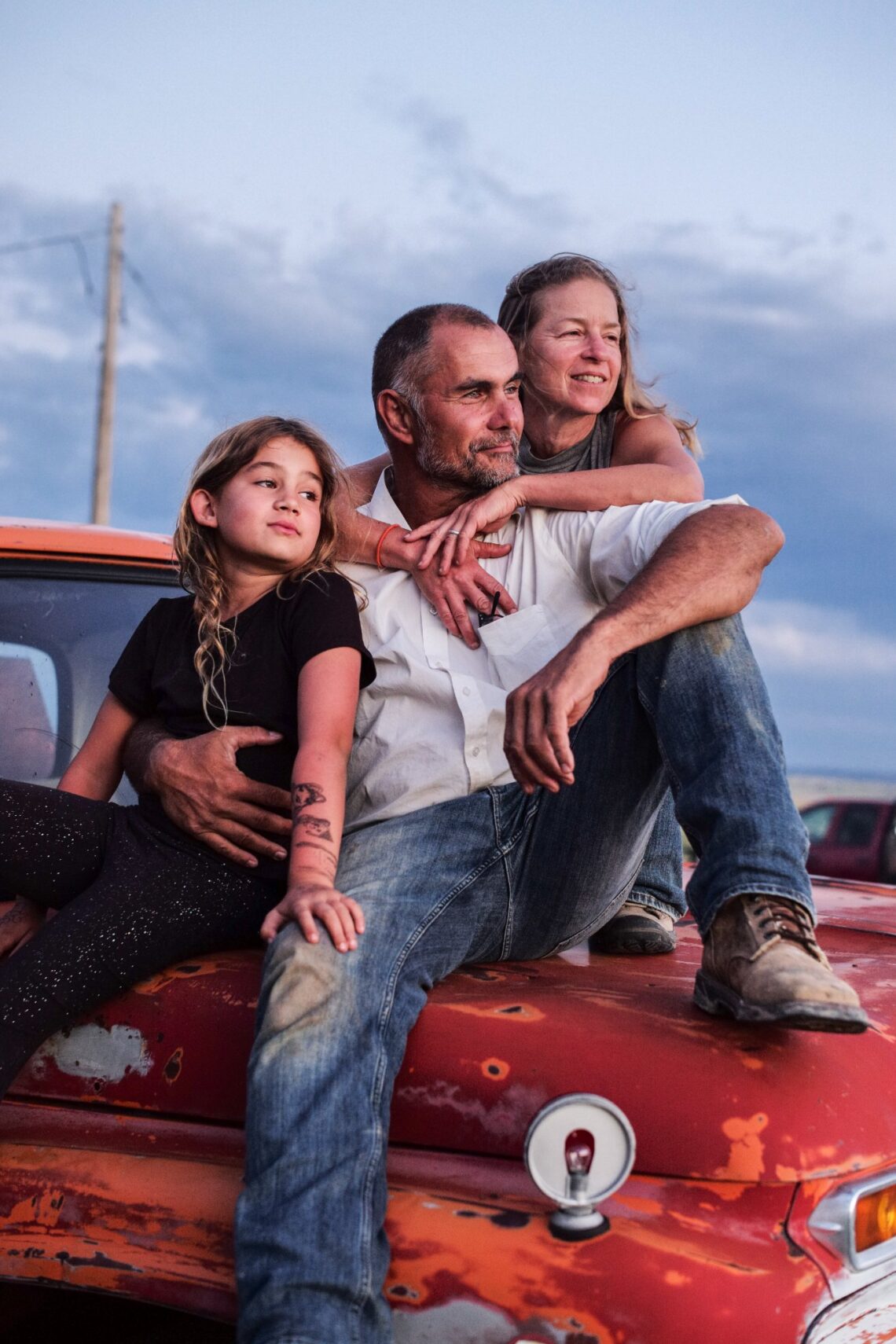
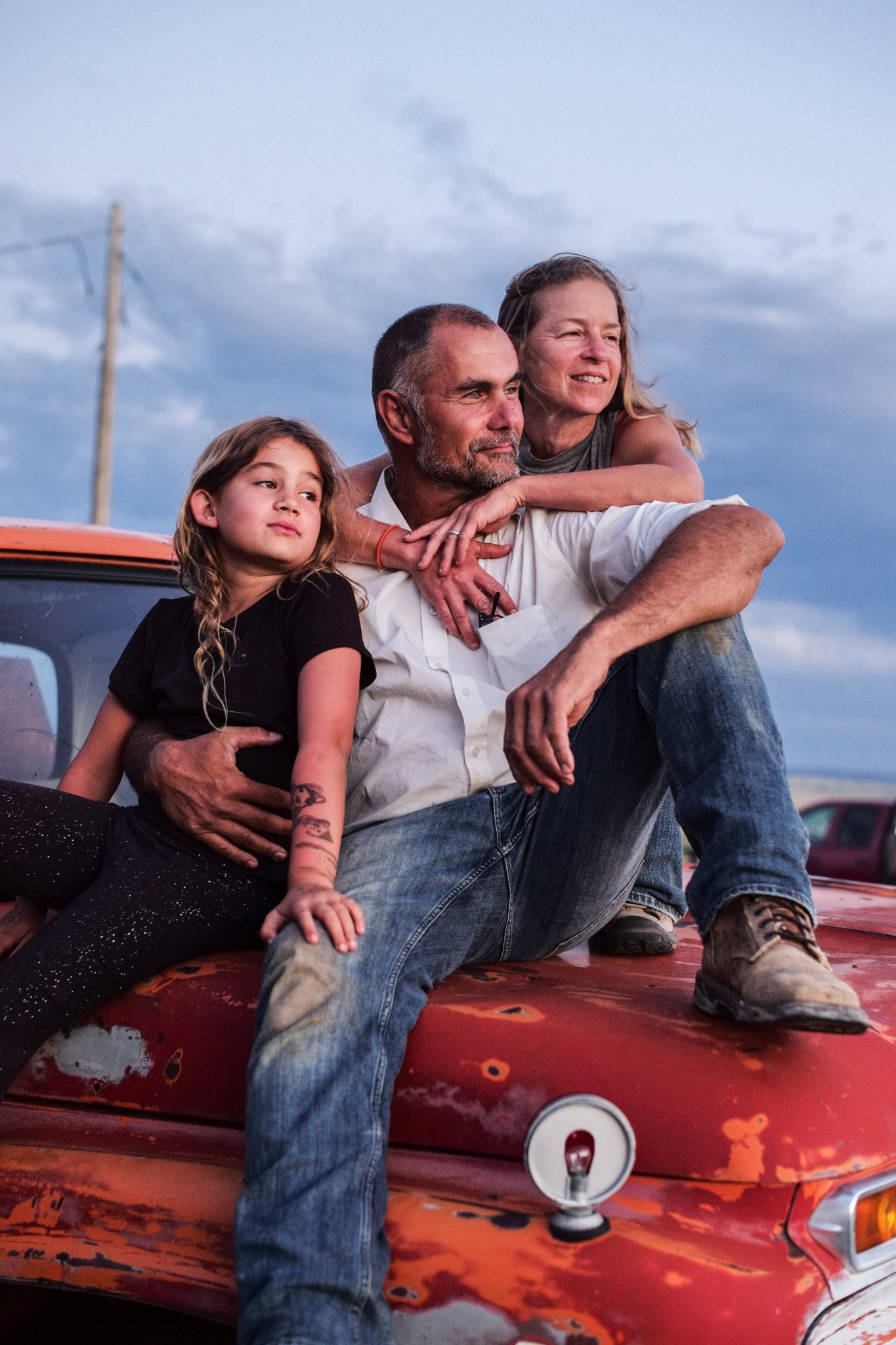
They teach these values to their own daughter – the power of knowledge, the way each human can do small things to contribute to a large goal, the appreciation for what we still have and have to fight to save.
Now, when I look at them run around the farm, sometimes in work clothes, sometimes rushing to an event in fancier outfits, I know that they are building their kingdom, one acre, one conversation at a time. And I wonder if it’s time to start building ours? We do not need glorious lands or shiny armor to begin. We might be armed with a trash bag and a glove to pick up litter on our next nature walk, or a canvas bag on our grocery run. We might wear last season’s clothes even though slightly out of fashion, and even – oh horror – skip that wash and wear our t-shirts an extra day to reduce the washing cycles that release plastic into the air. But we will know that we are joining the noble ranks of those who are building the planet of tomorrow. You and I might never see it, but the ones that come after us will. They will never thank us, nor remember us. But we would know that we chipped away at the junk to bring about love and moon bows.

Irina Abraham
Irina Abraham is originally from Eastern Europe. She spent over a decade working in the Performing Arts in New York City. Irina’s career spanned theater, film, TV, and the art world. She won acting awards, worked with multiple theater companies, co-founded an experimental performing group that went on winning awards in the New York Independent Theater scene. She wrote a children's play titled Mozart and Me that premiered at Baruch Center in NYC and toured in China, and an award-winning short film Lucy, Denny, and Love. Irina has written for the Whitehot Magazine of Contemporary Art and is currently blogging for the Verge Travel Magazine. Irina lives on the road at the moment, traveling the US in a school bus converted into a camper. Her travels inspired her to write fantasy stories and delve deep into self-knowledge, personal growth techniques, and ways to develop intuition. To share her knowledge, Irina offers tarot readings and leads online game sessions that help the players get clarity on their lives' paths.